Ken Martin surprised Kentucky Gov. Andy Beshear with a promise earlier this summer: The Democratic National Committee chair planned to invest $5 million each into the New Jersey and Virginia governors’ races this fall.
It seemed to Beshear, the incoming chair of the Democratic Governors Association, like more than what was needed. In any case, it was more than the DNC had to spend.
When Beshear’s aides followed up on the pledge, according to sources who spoke to CNN to discuss the party’s internal finances, Martin’s aides had to walk it back. The total of $10 million was too generous a promise given the DNC’s finances, so much so that Martin would likely have to tap the committee’s credit line to meet it.
Some observers question whether the DNC will have enough to cover the long-term cost of the $5,000-per-month increase in transfers to state Democratic parties Martin has promised, and which are set to begin in October.
All sorts of Democratic organizations are short on cash and high on infighting, while the party’s far left calls for primary challenges against its leaders and President Donald Trump pressures Democratic-run cities and institutions. But Martin and the DNC are at the center of the party’s crisis, struggling to raise money and dealing with the aftermath of last year’s loss as the Democratic brand hits record lows in popularity.
The DNC is paying Joe Biden’s legal bills for the investigation that House Republicans have launched into the former president’s mental acuity while in office, sources told CNN. The tab for Biden’s legal expenses has reached hundreds of thousands of dollars, one of the sources said. And there were millions in debt from Kamala Harris’ presidential campaign that even those involved have trouble putting an exact number on given the intertwining of finances between the campaign and the DNC. That debt has almost been paid off.
CNN’s conversations with over three dozen Democratic elected officials, top aides, donors, DNC insiders and other leading party figures reveal Martin’s paradox: The state party chairs and other insiders who chose Martin as chair think he’s doing great, while many of the leaders and strategists otherwise charged with trying to get the party back into shape tell CNN they barely think of him at all.
The DNC is “almost irrelevant,” said Tory Gavito, a Democratic activist and president of Way to Win, a group made up of major donors.
“The party isn’t where the heart of the movement is,” she said, instead pointing to mass protest movements such as the “No Kings” demonstrations in June, though the DNC has been organizing many of the town halls Democrats have been holding around the country in Republican-held districts. “There is a lot of energy around thinking about what comes next, how to win, and how we govern, and none of it has been sort of captured yet within the party, and so that’s going to be their big charge moving forward.”
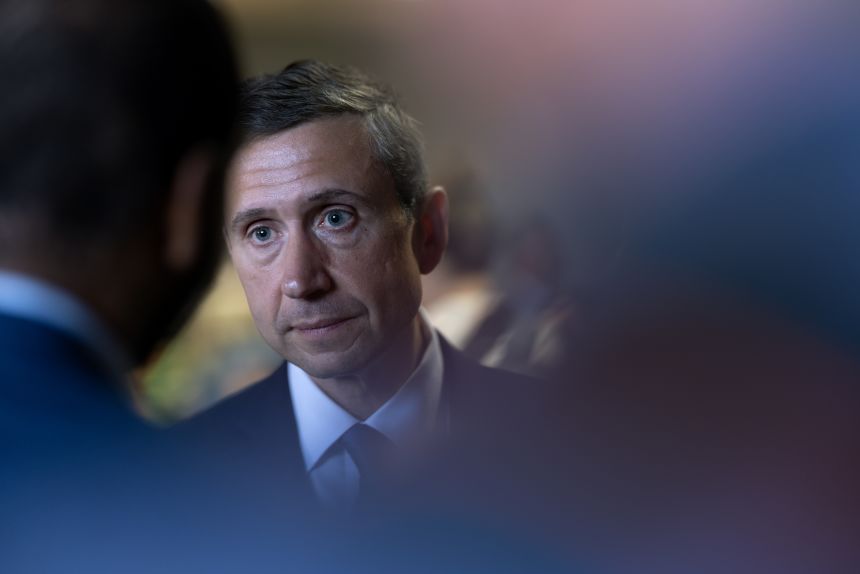
In an interview ahead of the DNC’s national meeting starting Monday in his native Minnesota, Martin compared what he said he knew coming in was a “thankless” job to the “political equivalent to being a fire hydrant. You get pissed on by everyone. You get none of the credit when you win. You get all the blame when you lose. And if you’re doing your job right, you’re saying no more than you’re saying yes.”
“I could give a sh*t about people right now in terms of people who are pissing on me, because at the end of the day, I have one goal. And that is winning elections,” Martin told CNN, adding later, “I didn’t run to come here and ask folks in DC for permission to do things the same way that they’ve always been done.”
The Republican National Committee is far ahead of the DNC in both donor enthusiasm and actual money. The RNC reported $84.3 million on hand at the end of July, six times the DNC’s reported $13.9 million.
The RNC paid for some of Trump’s legal bills after his 2020 loss, and Biden allies note the former president raised many millions for the DNC, which is now paying a fraction of that for his legal bills, though not those of close aides who’ve been called to testify.
Martin said he’s “honored” to help cover Biden’s legal expenses for a House Oversight Committee process that took them all by surprise: “It’s the least we could do for his service to our country and to our party.” Stephanie Cutter, who took over Harris’ campaign communications last year and was responsible for some of the decisions that ran up big bills, has also been brought on to advise on their response to the investigation.
“Would I prefer not to be in that position? Sure,” Martin told CNN. “But you know, at the same time, this is part of our job and responsibility to help our candidates in their campaigns, and we’ll continue to do that.”
As for Harris, the DNC is preparing to close out a confusing year of intermingled finances between the committee and the former vice president’s campaign.
Harris’ campaign had been counting on a win in November, or at least an extended period of counting votes, to keep running up donations. But when the election was quickly called for Trump, the money that aides had put into additional efforts in the final days, as well as late-arriving invoices and compliance errors, left them millions of dollars in the hole — despite the campaign’s public insistence after Election Day that it didn’t have outstanding debts.
After Martin was elected chair early this year, he agreed to an arrangement worked out for Harris by her campaign chair, Jen O’Malley Dillon, to keep sending fundraising emails using Harris’ donor list, both to help make up millions in outstanding expenses and to keep the list from getting caught by email spam filters out of lack of use.
Much of the fundraising that has sustained the DNC is from emails Harris signed to that list, creating frustration among people close to her for being blamed for the money problems.
“Like many presidential campaigns in recent history, we’ve done everything necessary to ensure all bills were covered, leaving the DNC no worse off financially than it would have been on Election Day,” a person familiar with the former vice president’s fundraising operation told CNN. “What’s odd is criticizing the campaign for debt while in the same breath celebrating how much the VP’s voice helped raise for the party.”
Harris has lawyers preparing to take back part of the email list, which has helped generate much of the DNC’s money raised online, to fundraise for her own projects now that she won’t be running for governor of California.
A Harris spokesperson did not respond to several requests for comment.
In an election for which bigger political presences like Pete Buttigieg and New Jersey Gov. Phil Murphy passed, in part because they knew how thankless the job would be, Martin — then the Minnesota Democratic-Farmer-Labor party chair, long known to want to lead the national party — ran a campaign so aggressive that some DNC members who opposed him asked his home-state Sen. Amy Klobuchar to intervene.
Martin moved to Washington after he won in February. He lives in a two-bedroom apartment a few blocks from the DNC offices. His wife usually stays in Minnesota, and he’s often the first one to arrive at work and the last to leave.
Much of his time has been consumed by negotiating new arrangements for voter databases and labor agreements with staff. He has also launched what he calls a new Office of Strategy and Innovation, though few inside or outside DNC headquarters know what it does.
Staffers say Martin can be combative but also inspiring in ways they don’t expect. He told them in his first full staff meeting as chair his personal story of growing up the son of a single mother on government assistance; recounted bringing together firebrand Rep. Ilhan Omar and the many she riled up in Minnesota; and told them then he wanted to limit dark money and the influence of PACs.
“These are the things I’m fighting for, and I can’t do it alone,” he exhorted them.
Aides like the snack selection he’s put outside the chair’s office, which he’s dubbed “the People’s Cabinet,” stocked with everything from Jolly Ranchers to chips. They get a kick out of the original filing cabinet from the Watergate break-in at the 1972 DNC headquarters that he moved up from the basement to put alongside it. The younger staffers, especially, often head to the mini fridge in Martin’s personal office to grab cans of the Celsius caffeinated water he’s always drinking.
Those who like Martin and those who don’t describe him as constantly feeling he’s being messed around with and underestimated, out to prove he’s a bigger deal.
Overpromising on spending, with an eye toward wanting to outdo what the DNC spent on races four years ago under the last chair, is symptomatic of that, his critics say.
But so is what people in the rooms describe as his inability to close the deals with donors looking for a stronger presence than the promise he ran on to invest in state parties.
Martin has recently walked away empty-handed from meetings with reliable donors like the media entrepreneur Haim Saban and advisers to Arthur Blank, the Home Depot co-founder and owner of the NFL’s Atlanta Falcons.
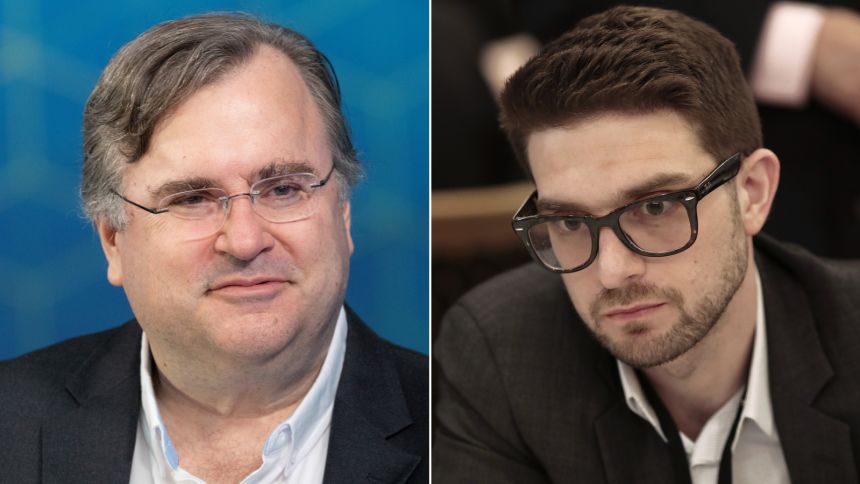
Others have shown signs of coming around, including LinkedIn co-founder Reid Hoffman and investor Alex Soros, son of billionaire George Soros. Martin criticized a rival in the chair’s race for having ties to both of them.
“People make too much of any disagreement they may have starting in a new chairman at the DNC. I think he will do a good job with this,” former House Speaker Nancy Pelosi, who backed Martin’s opponent in the race, told CNN.
“We help him to succeed. But we’ve never really depended so much — I never have — on the DNC to win the House. That’s really something that’s built for the presidential,” Pelosi said.
Martin’s issues go well beyond money.
House Democratic Leader Hakeem Jeffries has argued with Martin over wanting him to spend more time talking about Republican corruption. The chair argues that many voters don’t think Democrats are much better. Senate Democratic Leader Chuck Schumer doesn’t talk with Martin much — he has a tendency to mostly ignore DNC officials.
According to people involved in the conversations, Martin’s name didn’t come up around the table of strategists working with California Gov. Gavin Newsom as he dug in for redistricting in retaliation for Texas’ move to redraw US House maps in the middle of the decade. The two did appear together on a virtual call focused on redistricting organized by the DNC last week along with New Jersey Sen. Cory Booker and Texas state Rep. Nicole Collier.
Martin also made an early trip to Texas to meet with Democratic state legislators who eventually fled the state to prevent the Texas House from voting on redistricting maps that would give Republicans an advantage. He also gave short remarks at a press conference several of those Texas lawmakers held in Chicago.
He cut a DNC video in an echoing room with a blank white wall behind him, sprinkling in a few deliberately dropped curses in expressing his frustration. Reposts and likes for his post on X totaled fewer than 1,000.
In Chicago and beyond, several leading Democrats quietly joked to one another about his line that the party needed to bring “a knife to a knife fight.”
And even aside from the showdown with former vice chair David Hogg that eventually resulted in his ouster, Martin has spent months sparring with DNC members who accuse him of pettiness and going after those who didn’t vote for him in the election or get on board with him since.
Some complaints are the epitome of internal politics: American Federation of Teachers head Randi Weingarten, who had been a DNC member almost as long as the 25-year-old Hogg has been alive, broke with Martin because he was against Hogg and because he removed her from the internally powerful Rules and Bylaws Committee. He felt she played dirty in the race against him. Now she’s pulled her union’s money and support.
At this week’s meeting, members are slated to be mostly focused on installing new members and debating revisions to the DNC charter, such as changing the order of succession should Martin resign or creating a subcommittee to make recommendations about possibly limiting some kinds of donations to presidential candidates.
“Whether it’s neutrality clauses or they’re focused on different amendments to our bylaws,” said Allison Minnerly, a new DNC member from Florida, “they’re focused on just general things an everyday person would not care about.”
DNC members are also set to debate two competing resolutions not on party business or upcoming elections but on Israel: one calling for a two-state solution with an immediate ceasefire; one for recognizing a Palestinian state with an immediate ceasefire.
“Our agenda should be twice as big and much more heavy on substance. The rules and regulations should be put up for a vote — that should be two hours,” said Donna Brazile, who served two stints as acting chair of the DNC. “After that, the rest should be about the future.”
Meanwhile, the changes in how DNC members are picked and which new ones will be added will also be debated at the meeting. Martin says the changes are about democratizing and expanding the organization’s reach, but as is happening throughout the Democratic Party, they have roiled older Black leaders who say they are being sidelined.
“A lot of the African Americans who’ve been staunch Democrats are gone and have stressed that they may go independent,” Virgie Rollins, the Michigan-based chair of the DNC’s Black Caucus, told CNN. “I don’t want to see us be divided right now. I don’t want to see people in this party dealing with minor issues when we have a big challenge ahead of us.”
Former chairs and other DNC officials have conferred in dismay about what they see as missed opportunities. Operatives leading Democrats’ marquee races for the fall say they’ve gotten used to shrugging off what Martin says.
“He won by playing a lot of small ball — and this is not a time for small ball,” a former DNC officer told CNN. “This is a time for us to be surgical and ruthless, and he’s made himself pretty irrelevant because of all the promises he made.”
With Trump back in the White House, those defining the infrastructure of the opposition party are the types otherwise most known for wearing funny hats on the convention floor every four years.
To state party chairs who have long felt overlooked, Martin’s pitch was a perfect fit. His promises to give more money to many cash-strapped state parties made him a hero. He won overwhelmingly on the first ballot.
Now, though, all those promises are coming due. Local Democratic officials expect Martin to reinvent the DNC fully in their image, to the point that a main recommendation of the massive postmortem about the 2024 campaign, according to people familiar with the “autopsy,” will be that even more money should be spent on state party efforts.
For many of the DNC members themselves, the talk of the crisis for the country and the party has been satisfied by the additional $5,000 each month — red states get another $5,000 each month on top of that — through Martin’s new State Partnership Program.
That’s money the DNC doesn’t have to spend, according to people familiar with the matter. It’s also cash to be pumped into sometimes dysfunctional local leaders in places that haven’t seen competitive major elections in years.
Missouri Democratic Party Chair Russ Carnahan defended Martin’s plan. He says critics are falling prey to the kind of short-term thinking that led to Democratic strength collapsing in many parts of the country that used to be competitive, like his own state.
“We’ve got to build infrastructure. That’s going to help candidates, and we’re going to be able to stretch our reach not just in swing districts, but into districts where with this coming year we wouldn’t normally be competitive,” Carnahan said.
Carnahan, a former congressman and scion of a prominent Missouri Democratic family, told CNN that when he took over operations in 2023, he modeled his revamp on what Martin did over his years in charge of turning Minnesota reliably blue.
“You’ve got to build the ship and get the sail up because you know the wind is coming. But if you don’t build the ship, you’re not going to be able to catch the wind. And that’s where we are right now,” he said.
CNN’s Arit John contributed to this report.