Suno.com, once seen by many creators as the leading platform for AI-generated music, appears to be facing one of its most difficult moments since becoming popular among independent artists, composers, content creators, producers, advertisers, and music lovers around the world.
For a long time, Suno felt almost magical.
With just a few lines of text, users could create complete songs with convincing vocals, strong arrangements, emotional melodies, and production quality that could easily be mistaken for a real band recording in a professional studio.
Until early May 2026, many users still considered Suno the number one AI music generator in the world. It was fast, creative, surprising, and powerful enough to turn simple ideas into songs that sounded ready for streaming platforms, radio, videos, campaigns, jingles, and social media content.
But suddenly, something seems to have changed.
Users are complaining that Suno no longer follows prompts as well as before
One of the biggest complaints from Suno users is that the platform no longer seems to follow prompts with the same precision.
Detailed instructions that used to generate accurate results now often lead to generic songs, repetitive structures, weak melodies, unnatural vocals, or tracks that feel disconnected from the original idea.
Users who ask for a specific genre, mood, vocal style, arrangement, rhythm, or cultural influence often report that the result is no longer as faithful as it used to be.
For many creators, the feeling is simple: Suno has become less musically intelligent.
The Suno Cover feature is also under criticism
Another major point of frustration is the Cover feature.
This tool was one of Suno’s most exciting features. It allowed users to upload an audio reference and generate a new version based on that material. Many creators used it for musical experiments, parodies, demos, reinterpretations, creative tests, and early versions of original songs.
Now, according to several user reports, the Cover feature no longer delivers the same level of similarity or musical connection to the uploaded audio.
Instead of preserving the essence of the original track, users say the generated song often changes the melody, chord progression, structure, rhythm, and overall identity of the reference. In some cases, the final result does not sound close to the uploaded audio at all.
For paying users who subscribed to Suno because of this feature, the disappointment is understandable.
Another point that has increased user frustration is that, according to reports, switching back to older versions does not seem to solve the problem. Many creators say they tested previous Suno models in an attempt to recover the quality they had before, only to realize that the change appears to have affected the entire platform. In other words, this may not be just an isolated issue with the latest model, but a broader change in the system’s overall behavior, impacting even the older versions that once delivered much better results.
Did Suno change the model silently?
That is the question many users are asking.
So far, Suno has not given a clear public explanation about a possible drop in quality, a silent change in the model, or a major adjustment to the Cover feature.
Online communities are full of theories.
Some users believe this could be the result of a poorly adjusted update. Others think the platform may have changed internal rules related to copyright protection, music similarity, or legal pressure from the recording industry.
There are also people who believe major record labels may be influencing the direction of AI music platforms. However, without an official statement from Suno, this remains speculation.
What is clear is that many users have noticed a difference, and they are not happy.
The biggest risk for Suno is losing creator trust
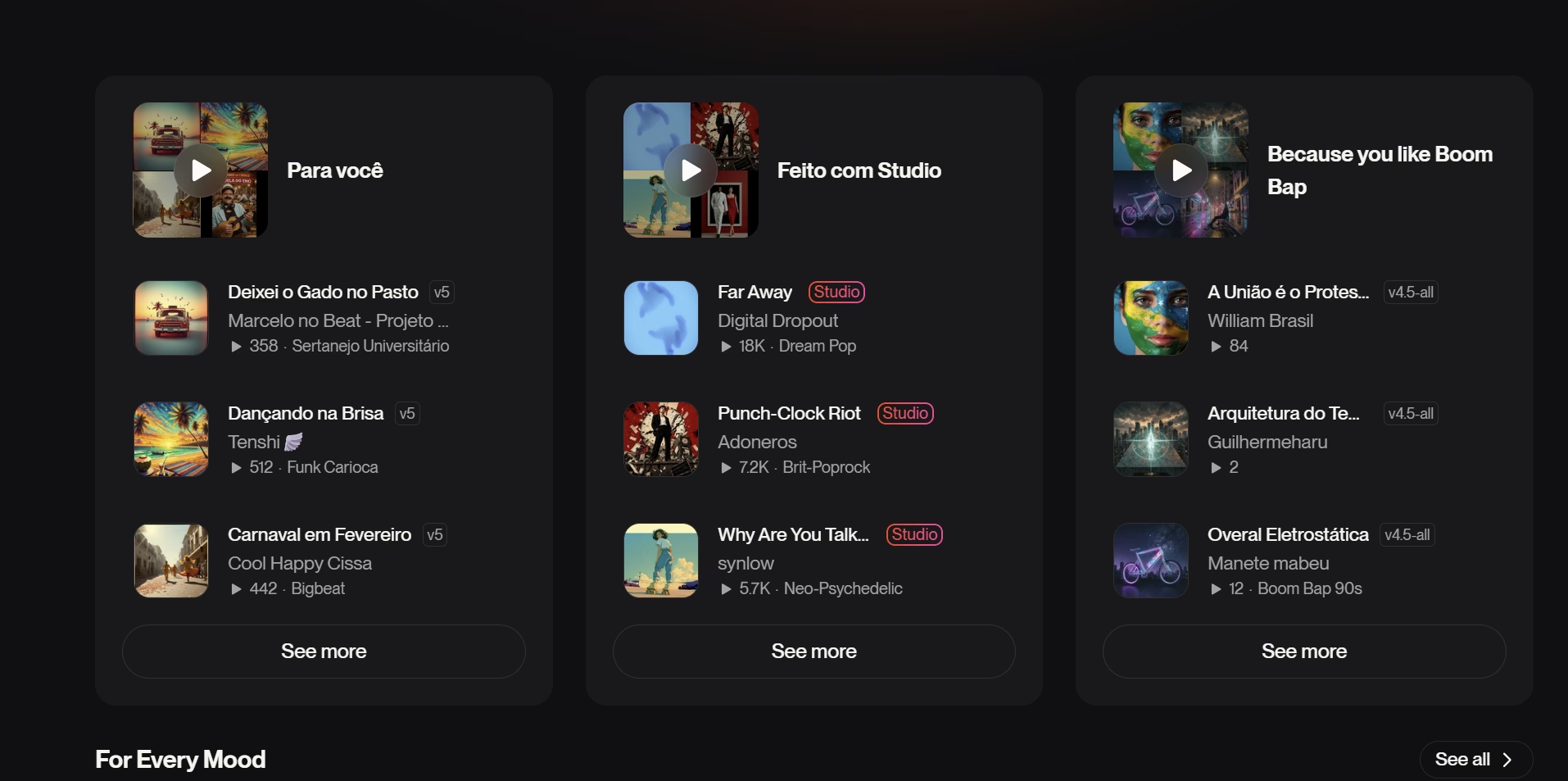
Suno did not become popular only because it was a powerful AI tool.
It became popular because it delivered emotion.
Creators would type an idea, click generate, and hear something surprising, polished, and sometimes genuinely moving. That sense of discovery was the reason so many people became loyal users.
When that trust breaks, users start looking for alternatives.
That is already happening in online forums, social media comments, and AI music communities. Some users say they are canceling paid plans. Others are pausing subscriptions, saving credits, or waiting for a new platform to take Suno’s place.
This shows how unstable the AI music market still is.
One platform can dominate the industry today and lose momentum tomorrow if users feel the quality has dropped.
Is this the end of Suno’s golden era?
It may still be too early to say that Suno is finished.
The platform remains one of the most important AI music generators in the world. It has a strong brand, a large user base, advanced technology, and a major position in the future of music creation.
But this moment requires an answer.
If the drop in quality is temporary, Suno needs to fix it quickly. If the change was intentional, the company should explain it clearly. If the future of the platform will be more limited because of copyright, licensing, or legal pressure, users deserve transparency.
What Suno cannot do is pretend that nothing happened.
The community noticed. Creators noticed. Paying users noticed.
Suno was once the king of AI-generated music. Now, in 2026, the question is no longer whether Suno can create great songs.
The question is whether Suno can still keep the trust of the people who made it the biggest name in AI music.